Energy audits · Pasco, WA
Finding the air leaks hiding in your attic, basement and crawlspace
Total Quality Air uses special diagnostic tools to pinpoint hidden air leaks, seals them, and checks that your furnace, water heater and dryer still vent properly afterward.
Chapter 01
The air leaks you can't feel are the big ones
Drafts around a window or a door are easy to find, because you can feel them on your hand. The holes that cost you the most are usually the ones nobody sees, up in the attic, down in the basement and under the floor in the crawlspace. Those gaps around pipes, wiring and the tops of walls pull air through the house all year long.
That's why an energy audit starts with where the house actually leaks, not where you assume it does. Total Quality Air uses special diagnostic tools to pinpoint the hidden air leaks in Pasco, Kennewick and Richland homes, so the sealing goes where the air is really escaping instead of wherever a tube of caulk happens to reach.
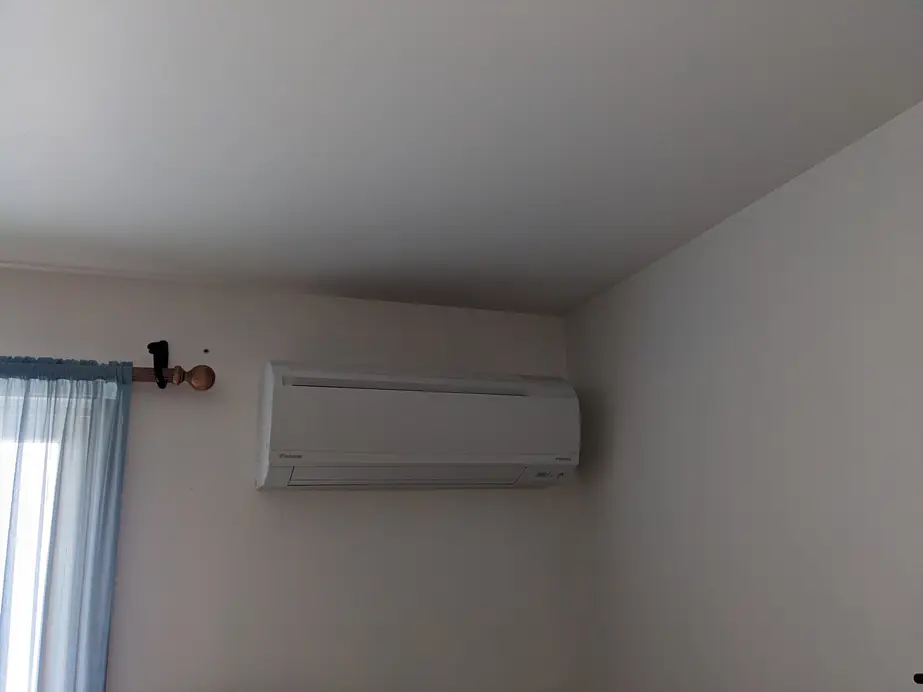
Indoor ductless wall unit in a bedroom after an energy and comfort assessment
How a leak hunt turns into a tighter house
Once the leaks are located, they get sealed with caulk, spray foam or weather stripping, whichever the spot calls for. The envelope is the outer shell of the house, meaning the walls, ceiling, windows and floor. Tightening it makes the rooms more even and lets the furnace and air conditioner quit fighting the weather just to keep up.
Carlos Garcia has more than 20 years in the HVAC trade, and the audit gets treated as heating and cooling work, not a side job. Leaks, ducts and equipment all push on each other, so the person who looks at your attic is also thinking about your furnace, your air conditioner and how the whole system runs.
Chapter 03
What sealing can save, and the venting check after
The general figure quoted for this kind of work is that sealing and insulating the envelope can save up to 20 percent on heating and cooling costs, or up to 10 percent on the total annual energy bill. That's an industry number, not a promise for your house. What you actually see depends on how leaky the place was and how old it is.
A tighter house also needs a safety check. After any project that cuts air leakage, the combustion appliances should be checked to make sure they're venting properly. That means the gas or oil furnace, the water heater and the dryer. Sealing too tight is unlikely in many older homes, but a certain amount of fresh air is still needed for good indoor air quality.
The EPA keeps an indoor air quality reference at epa.gov/iaq for anyone who wants to read up on combustion safety. If you'd rather talk it through with a person, call the shop at (509) 205-1592. Hablamos Español, and we're glad to walk you through what an audit would look at in your house.
"They explained everything clearly, answered all my questions, and made sure the job was done right." Raul Garcia, Google review.
Leaks and ducts go hand in hand, so a house that gets an audit often needs a look at duct sealing too. If the audit points toward new equipment, our HVAC installation page covers how a system gets sized for the house you actually have.