DUCT SEALING · Pasco, WA
Sealing the ducts that waste a fifth of your heating and cooling
Leaky, torn and disconnected ducts found and sealed, plus the duct testing the Washington State Energy Code calls for.
Chapter 01
Where the air goes before it reaches the room
In a typical house, about 20 percent of the air moving through the duct system is lost to leaks, holes and poorly connected ducts. You pay to heat or cool that air and it never reaches a room. The result is an inefficient system, high utility bills and a house that will not get comfortable no matter where the thermostat is set.
The usual trouble spots are leaky, torn and disconnected ducts, poorly sealed registers and grilles, leaks at the furnace and the filter slot, and kinks in flexible duct that choke airflow. If one room in your Pasco or Kennewick home is always too warm or too cool, or you feel drafts, a leak in the ductwork is a likely suspect.
Leaky ducts also pull in whatever is around them. That can mean insulation fibers, mold or mildew, car exhaust and pesticides, and it can mean combustion gases from fireplaces, wood stoves, gas furnaces and water heaters. So sealing is a comfort fix and an air quality fix at the same time.
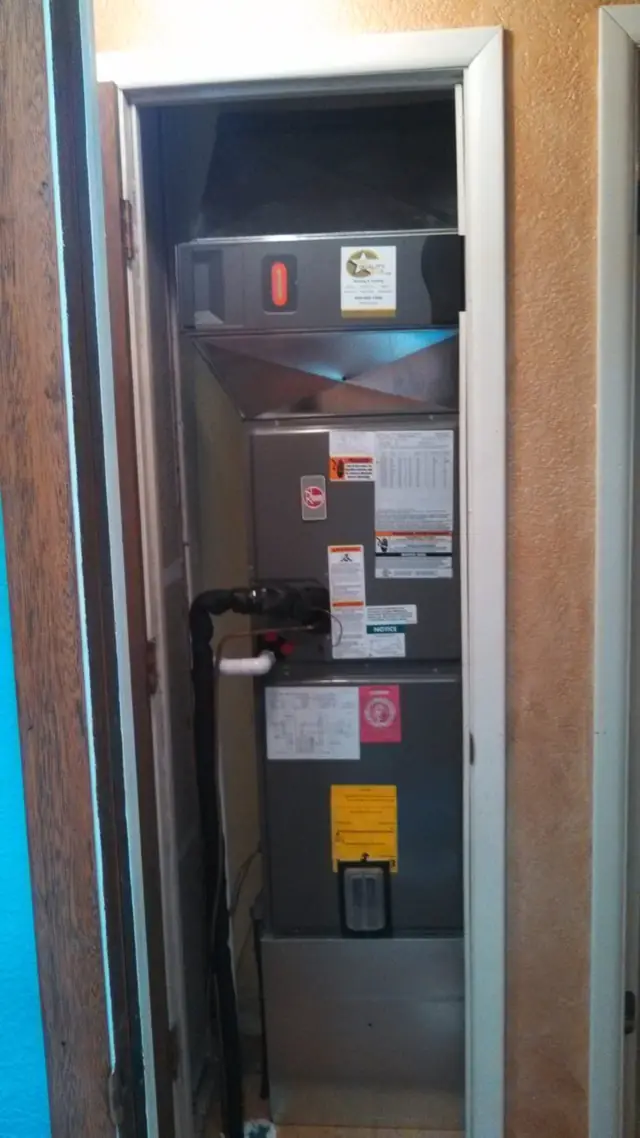
Air handler and ductwork connection inside a closet installed by Total Quality Air
Testing, sealing and the Washington code
The Washington State Energy Code requires duct testing when certain parts of a heating or cooling system are repaired or replaced. Your HVAC contractor must test the ducts and give the results to you and to the building official who issued your permit. Once you have the numbers, it is your call whether the contractor seals the ducts.
Some houses are exempt. You do not have to test if all the ductwork is inside the house or less than 40 linear feet of it is outside the conditioned space, if the ducts were already tested and sealed, or if they contain asbestos. Not sure which applies to you? Call Total Quality Air at (509) 205-1592 and ask.
Chapter 03
What changes once the ducts are tight
Sealing evens out the temperature from room to room and cuts down drafts. Because leaks stop pulling in dust, insulation fibers and combustion gases, the air in the house gets cleaner too. Leaky duct systems typically contribute 20 to 40 percent of a home's heating and cooling costs, which is why this work pays back so quickly.
Outside research backs that up. National Renewable Energy Laboratory and U.S. Department of Energy work concludes that sealing or insulating ductwork can often pay for itself in three years from energy savings alone, and Lawrence Berkeley National Laboratory puts the energy wasted through duct losses in forced-air systems at 25 percent. Those are the labs' figures, not measurements from Total Quality Air jobs.
If you are planning to replace your system, ask about sealing first. Efficient ducts may make it possible to downsize to a smaller, less costly system, and sealing can raise a system's efficiency more than upgrading to a high-efficiency furnace, for less money. The shop gives up-front flat-rate pricing and serves Pasco, Kennewick and Richland.
"The technician was very nice, worked quickly, and was respectful of my home, no mess left behind at all." Denise Tapia, Google review.
Duct work often comes up during a system swap, so read about HVAC installation, or look at energy audits for the leaks in the rest of the house.